








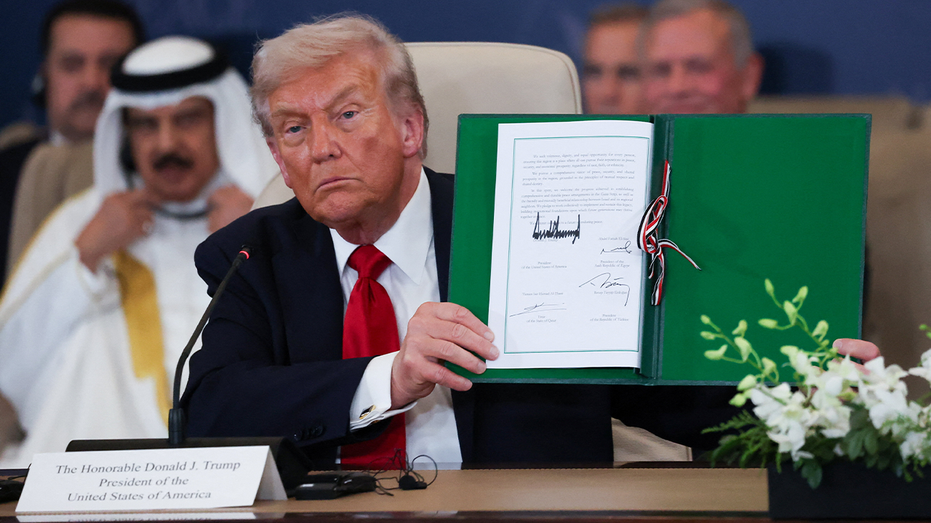
One year after President Donald Trump brokered a historic Gaza ceasefire and launched his ambitious 20-point peace plan, the initiative is garnering significant global backing, even from unexpected corners, marking a pivotal shift in regional stability efforts. The plan’s success is largely attributed to Trump’s leadership and his team’s ability to build trust with regional actors through a strategy of “peace through strength,” compelling Hamas to recognize a viable off-ramp from conflict. This pragmatic approach has fostered a global consensus, notably with the United Nations endorsing the Board of Peace through Resolution 2803 in November 2025, and the European Union pledging approximately $1 billion for Gaza’s early recovery, aligning with the Board of Peace’s priorities. The International Stabilization Force, tasked with training a future Gazan police force and overseeing demilitarization, has secured commitments from Kazakhstan, Morocco, Albania, and Kosovo, with more nations expected to join. Crucially, the plan explicitly excludes the United Nations Relief and Works Agency for Palestine Refugees in the Near East (UNRWA) due to ongoing investigations into over 1,500 employees for alleged ties to terror groups, with the Board of Peace emphasizing its commitment to working only with trusted partners. Even former Secretary of State Hillary Clinton acknowledged the plan’s potential, stating in a Financial Times editorial that while not her preferred approach, it possesses the “sufficient leverage, political engagement and potential resources to move parties towards implementation.” With approximately $18 billion in reconstruction pledges, including initiatives for rubble clearance, housing, and tunnel destruction, the path forward involves addressing the full demilitarization and de-radicalization of Hamas, a process managed by the National Committee for the Administration of Gaza (NCAG) with a focus on vetting educators and civil governance officials. This collaborative effort between the NCAG and Israeli authorities aims to build mutual trust, deliver essential services to Gazans, and foster security for Israel, potentially setting a precedent for future Israeli-Palestinian relations and wider regional peace.
Adapted from: Latest World News on Fox News