





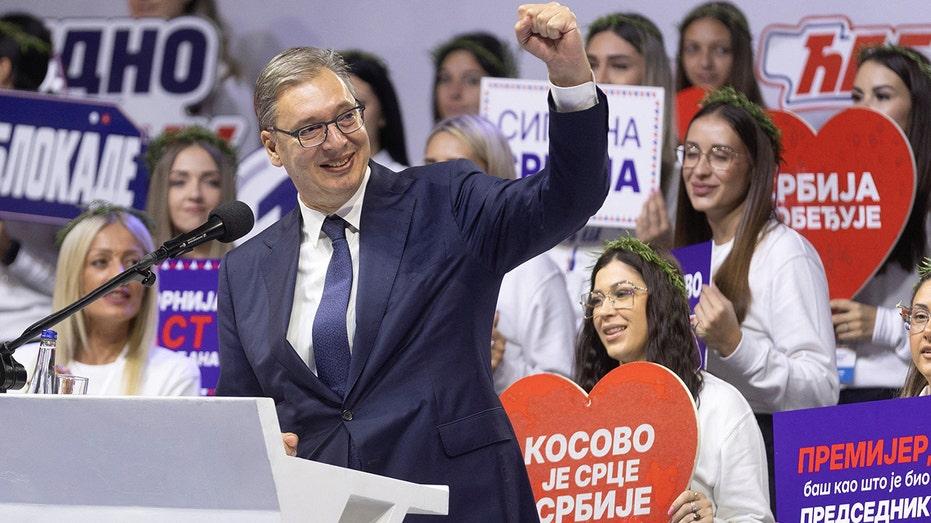
Serbia is witnessing its most significant political upheaval in years as longtime leader Aleksandar Vucic, stepping down from the presidency to run for prime minister, confronts a formidable challenge from a nascent student-led opposition group, the “Student List.” This movement, born from widespread anti-corruption protests ignited by a tragic construction disaster and fueled by demands for accountability, has achieved a level of popular mobilization that eluded traditional opposition parties, capturing public attention and momentum with a focus on transparency and the rule of law. Analysts like Helena Ivanov of the Henry Jackson Society view this as Vucic’s greatest test in his 14-year tenure, noting the students’ success in resonating with the populace. Conversely, Foreign Minister Marko Djuric dismisses the student movement’s chances, asserting that the Serbian public sees through their lack of a credible program, while highlighting Vucic’s economic achievements, including a GDP surge from 32 billion to over 100 billion euros. Meanwhile, a bipartisan group of U.S. senators has introduced legislation conditioning future aid on Serbia’s progress in judicial accountability and press freedom, signaling growing international concern over democratic backsliding and the potential for an unfair electoral environment, with fears that the current government might not respect an opposition victory. The Student List, a decentralized group with no single leader, aims to fundamentally tackle corruption and promote transparency, offering a stark contrast to Vucic’s established political power and his government’s often criticized handling of protests and accountability. The critical question remains whether this grassroots movement can translate its impressive street-level support into electoral success and effectively govern a nation accustomed to a decade of Vucic’s influence, all while navigating Serbia’s complex geopolitical positioning between East and West, and potentially reorienting its foreign policy and relations with the U.S. and EU.
Adapted from: Latest World News on Fox News