








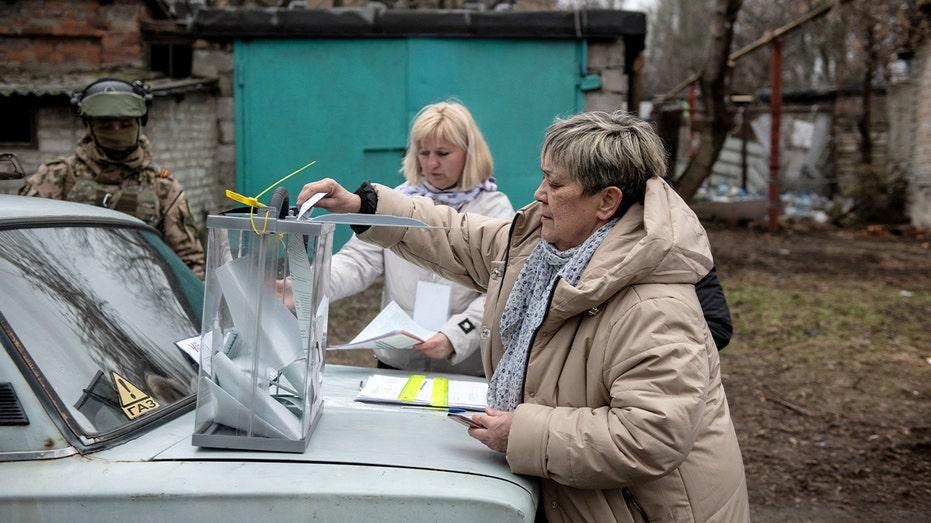
Russia’s parliamentary elections have commenced, notably including its occupied territories in Ukraine, a move widely criticized as an attempt to legitimize its ongoing invasion and annexation through a manufactured display of popular support. International observers, including the OSCE, have been deliberately excluded, signaling a clear disregard for democratic standards and Russia’s international commitments. Critics highlight that these elections are not about free and fair choice, but rather about reinforcing President Putin’s narrative, especially as Russia faces increasing dissent and international pressure. With stringent censorship laws in place and opposition figures like Lev Shlosberg facing severe penalties, the political landscape is one of pervasive fear and manipulation. The inclusion of occupied Ukrainian regions, where residents have been coerced into obtaining Russian passports to facilitate voting, is particularly contentious. Election officials conducting door-to-door ballot collection, escorted by soldiers, is seen as direct intimidation and a blatant violation of international law. Ukraine and the international community unequivocally reject the legitimacy of these elections and any representatives chosen from these territories, emphasizing that any participation is illegal. For Putin, these elections serve as a critical tool to project political stability and resilience on the world stage, manufacturing the appearance of public backing for both his party and the continuation of the war in Ukraine, especially when battlefield justifications become harder to sustain. As one analyst put it, ‘in Putin’s version of democracy, the voters get to choose… just not the result.’
Adapted from: Latest World News on Fox News