









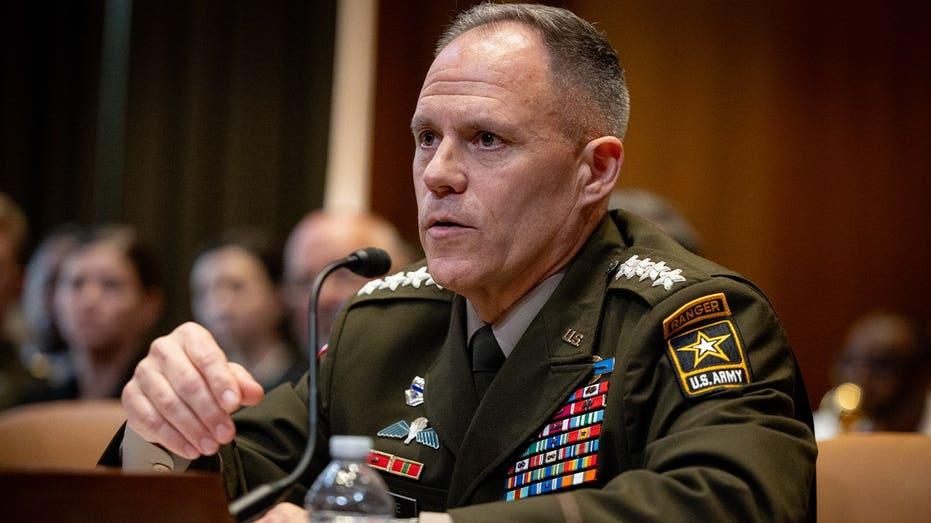
The United States Army is undergoing a critical strategic shift, preparing for a future where the battlefield could extend to American soil, a stark departure from decades of overseas combat. General Christopher LaNeve, the Army’s acting chief of staff, has issued a grave warning: power projection will be contested, meaning U.S. forces may face attacks on their own territory before they can even deploy. This new reality is driven by rapidly advancing threats like sophisticated drones, pervasive cyberattacks, and long-range weaponry that can target U.S. military installations and vital infrastructure. The Army is actively rethinking assumptions forged during the Global War on Terror, where secure bases and supply lines at home were taken for granted. In a potential conflict with a major adversary like China, these domestic vulnerabilities could be exploited to disrupt military mobilization, delay troop deployment, and cripple transportation networks. The Pentagon’s latest assessments highlight China’s advanced cyber capabilities, which are reportedly already positioned within U.S. critical infrastructure, posing a direct threat to national security. This concern is underscored by recent drone incursions over U.S. military bases, though not publicly attributed, signaling a growing proximity of threats. In response, the Army has rolled out a new operational framework, ‘How the Army Fights,’ which emphasizes readiness to deploy, communicate, and sustain operations even when bases, supply lines, and communication networks are under attack. This includes developing capabilities to operate disconnected from networks and then reconnect, ensuring maneuverability and continued mission execution. The Army is also bolstering homeland defense through initiatives like Joint Interagency Task Force 401, collaborating with federal and local law enforcement to enhance counter-drone defenses around bases and critical infrastructure, drawing lessons from real-world scenarios like those at the southern border. Furthermore, preparations are expanding to counter biological threats, integrating them into routine combat training to ensure mission continuity during disease outbreaks or deliberate attacks. This proactive stance acknowledges that in the coming years, advanced surveillance technology may make it increasingly difficult for military forces to operate undetected anywhere on the planet, necessitating a robust defense that extends to the homeland.
Adapted from: Latest Political News on Fox News