







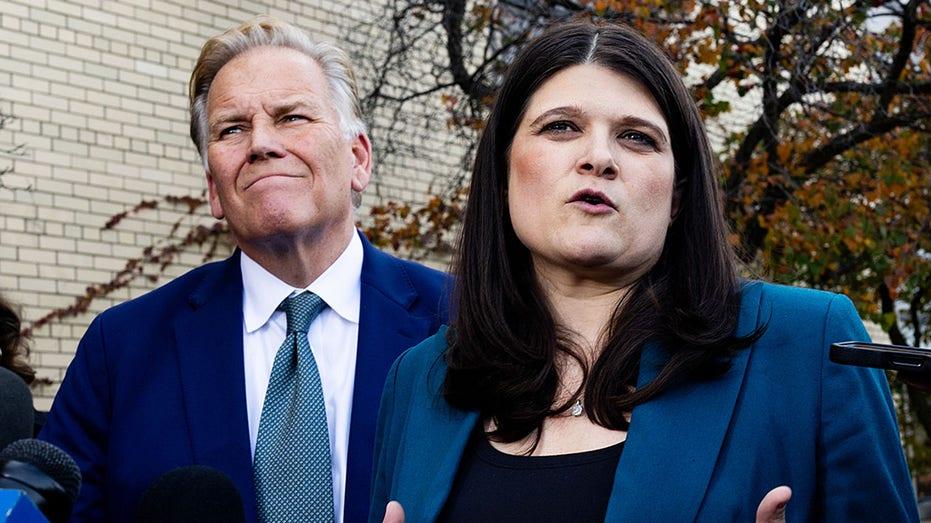
In a stunning political maneuver that upended the Michigan U.S. Senate race just hours before Election Day, Democratic Rep. Haley Stevens publicly endorsed Republican candidate Mike Rogers, a move that Rogers described as ‘flipping this thing upside down.’ Stevens, who had recently lost her primary to Democrat Abdul El-Sayed, reportedly called Rogers Sunday morning to offer her support, citing concerns that El-Sayed’s ‘anti-Jewish,’ divisive, and angry politics were detrimental to America. This unexpected endorsement triggered immediate and furious backlash from top Democrats, including Senate Minority Leader Chuck Schumer, who branded it a ‘despicable betrayal,’ and former Speaker Nancy Pelosi, who accused Stevens of ‘dangerously’ betraying Michigan families. Stevens had previously avoided explicitly endorsing El-Sayed, stating she was ‘still on the team’ but avoiding a full endorsement, even as tensions rose between her and El-Sayed, particularly after she condemned an ad linking U.S. support for Israel to higher grocery prices, which she deemed antisemitic, and El-Sayed’s campaign subsequently asked her to stay away from their events. The situation was further complicated by Stevens’ fiancé, Jason Turkish, a registered Democrat, who had already declared his intention to vote for Rogers, arguing El-Sayed’s rhetoric made the Jewish community ‘less safe.’ Despite earlier reports from Rep. Debbie Dingell suggesting Stevens had denied rumors of an impending endorsement as late as midnight Saturday, Stevens ultimately appeared alongside Rogers at a Detroit church service to announce her cross-party backing, emphasizing her decision to prioritize America over party lines. Rogers denied any prior knowledge or negotiation for the endorsement, stating Stevens acted independently, and he fiercely defended her against the ‘vicious’ attacks from her own party, characterizing her decision as one of ‘common sense’ to prevent a ‘disaster.’ Rogers also dismissed recent polling that showed El-Sayed with a significant lead, asserting his own internal polling indicated a much tighter race, within one or two points, and highlighted his campaign’s progress with Black voters in Detroit, a demographic Stevens herself had previously questioned El-Sayed’s outreach to.
Adapted from: Latest Political News on Fox News