









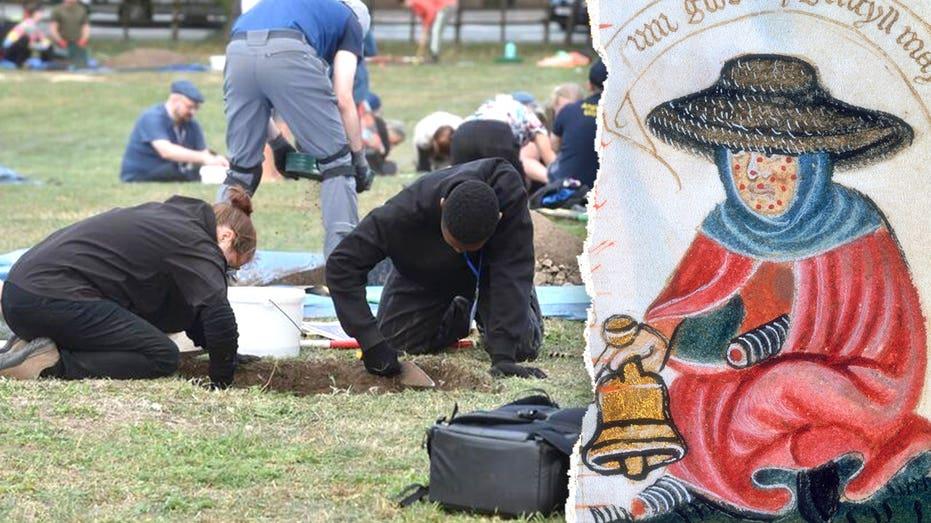
Archaeologists excavating the site of one of England’s oldest and largest medieval leprosy hospitals have unearthed previously undiscovered traces of individual patient living quarters and enclosed yards, offering a rare glimpse into the lives of those afflicted by the feared disease centuries ago. The Hospital of the Holy Innocents in Lincoln, which operated for nearly 500 years from the late 11th century, has yielded new findings that build upon previous excavations, revealing small, square structures that researchers believe may have served as separate dwellings or private garden spaces for up to 20 patients at a time. Professor Carenza Lewis of the University of Lincoln suggests that admission to this hospital was likely not for the destitute, stating, “If you had enough money and could buy your way into a leper hospital, it’s a bit like getting a place in a private care home or something like that,” indicating that patients may have had the means to afford specialized care and separate accommodations. These findings, part of a three-year research project, are shedding new light on the social dynamics and living conditions of leprosy patients during the Middle Ages, a time when the chronic bacterial infection, though curable today, caused severe disfigurement and social stigma.
Adapted from: Travel News Today on Fox News