








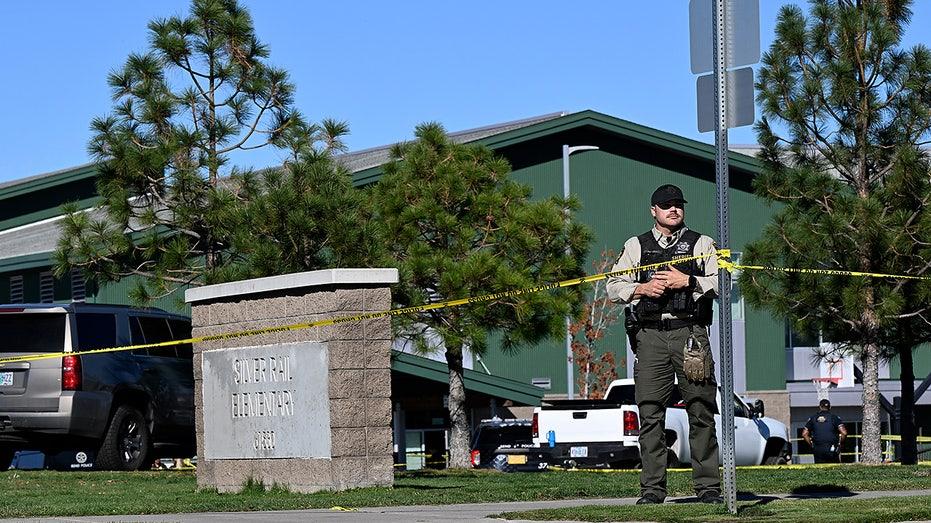
Following a tragic school shooting in Oregon that claimed the lives of three children and a teacher, Democrats have renewed their calls for stricter gun control measures. However, gun-rights advocates argue that the circumstances of the attack highlight the effectiveness of armed civilians and the potential drawbacks of further restrictions. The teenage shooter, who reportedly used a shotgun obtained from his mother, was ultimately stopped by an armed father of two students, Kaylub Giamanco, who pursued and fatally shot the assailant within Silver Rail Elementary School. Gun Owners of America, represented by Aidan Johnston, criticized Democrats for what they called the “shameful weaponization” of the tragedy, emphasizing that the school was a gun-free zone and that the killer did not use an “assault weapon.” Johnston asserted that “more gun control isn’t the solution” and that an armed bystander with “good aim” was what ultimately saved lives. Echoing this sentiment, John Lott, president of the Crime Prevention Research Center (CPRC), stated that gun-free zones can become “magnets for these attacks” and hinder the intervention of armed citizens. Lott cited CPRC research indicating that legally armed civilians have stopped more active shooter incidents than police between 2014 and 2024. The National Rifle Association (NRA) also questioned the efficacy of new gun laws, pointing out that Oregon already possesses many desired gun-control measures, yet the attack still occurred. The NRA highlighted the armed bystander’s intervention as proof that “when seconds count, a prepared law-abiding citizen can stop a killer.” This perspective clashes with statements from Oregon lawmakers like Senator Ron Wyden and Representative Janelle Bynum, who are advocating for “commonsense gun laws” to prevent future tragedies, despite acknowledging the bystander’s actions. The debate also touches upon recent Supreme Court rulings that have expanded gun rights, with Senator Jack Reed urging the Court to reconsider its stance and Republicans to collaborate on preventative policies. The NRA further argued that universal background checks and red-flag laws might not have prevented this specific incident, given the shooter’s alleged access to a family member’s firearm, and that gun-free zone policies leave schools more vulnerable by disarming responsible citizens.
Adapted from: Latest Political News on Fox News