










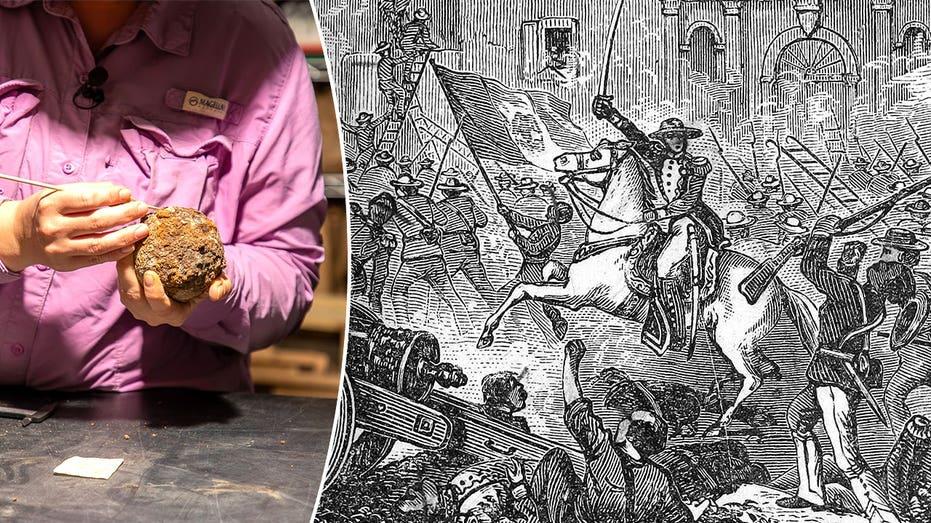
In a striking revelation that bridges nearly two centuries, archaeologists at the Alamo in San Antonio have unearthed four solid cannonballs, tangible remnants of the legendary 1836 siege. Discovered along the perimeter of the iconic Alamo Church, these artifacts, ranging from 1.8 to 3.26 inches in diameter and corresponding to 1- and 6-pounder cannons, add crucial physical evidence to the historical narrative. This latest find follows earlier discoveries of a 4-pounder in March and another 6-pounder in June, intensifying the mystery of which army unleashed these projectiles. While the bronze composition of three cannonballs suggests a Mexican origin, the possibility remains that Alamo defenders might have repurposed them. Crucially, the context of their discovery—interspersed with musket balls and gun parts within soil layers dating back to the battle—firmly links them to the 13-day siege. Historians believe these cannonballs were likely fired from Mexican artillery positions outside the Alamo, aimed directly at the church. These discoveries, attributed to an expanded excavation area, offer modern archaeologists a profound connection to the past, transforming abstract historical accounts into concrete evidence of the sacrifice made by those who defended the Alamo.
Adapted from: Travel News Today on Fox News