








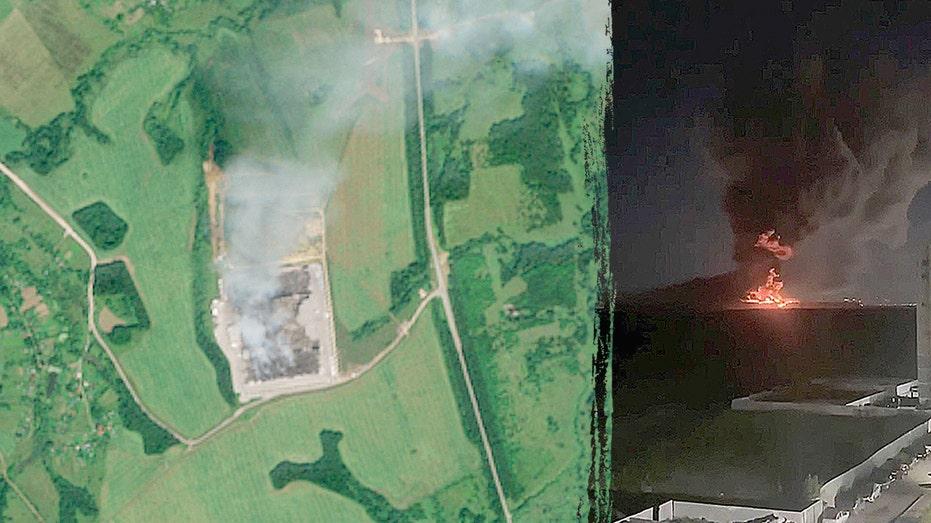
Ukraine’s escalating deep-strike campaign has delivered a devastating blow to Russia’s largest online retailer, Wildberries, with recent drone attacks on its facilities, including a significant strike on an oil and petrochemical complex in Bashkortostan that ignited a fire at a Wildberries site. This latest incident is part of a relentless series of Ukrainian assaults targeting the e-commerce giant, which began on July 18th and has already resulted in casualties and injuries, with drones hitting centers in Kotovsk and Elektrostal, killing seven and wounding over sixty, followed by attacks in Krasnodar and Nevinnomyssk that injured fifteen. These ‘kinetic sanctions enforcement’ actions, as described by experts, aim to steadily increase the cost and risk of sustaining Russia’s war economy, with total estimated losses for Wildberries and its sellers ranging from $6 billion to $8.5 billion. With limited insurance coverage for most sellers, the financial damage cascades onto tens of thousands of small businesses, disrupting Russia’s logistics sector and forcing a repricing of wartime risk, leaving approximately 27% of Wildberries’ warehouse capacity inoperable. Beyond the financial devastation, the strikes carry a profound psychological impact, sowing fear, shock, and anger among witnesses and highlighting the perceived limitations of Russian air defenses. Wildberries founder and CEO Tatyana Kim, Russia’s richest woman, has decried the attacks as ‘terrorist,’ emphasizing the billions in losses for entrepreneurs across Russia and partner countries like China and Kazakhstan, while simultaneously indicating the company’s reluctance to cover all these damages, potentially incentivizing sellers to diversify, shorten inventory cycles, demand prepayment, and increase insurance costs. Kyiv views Wildberries’ extensive supply chain as a strategic target, identifying its warehouses as distribution nodes for dual-use goods including body armor and drone components, and as channels for sanctions circumvention, while also retaliating for Russia’s attacks on Ukraine’s civilian logistics infrastructure. The Kremlin’s silence and Kim’s negotiations for tax deferrals rather than compensation or air defense protection send a stark message to Russia’s business elite: proximity to power offers no guaranteed protection, and private enterprises are expected to absorb the war’s costs. Furthermore, the attacks have exposed Wildberries’ controversial new policy restricting workers’ cellphone use, officially justified as an air-defense measure but widely seen as an attempt at information control to prevent footage of damage and the war’s impact from reaching the public, while also creating a critical vulnerability by limiting workers’ ability to call for help during attacks.
Adapted from: Latest World News on Fox News