







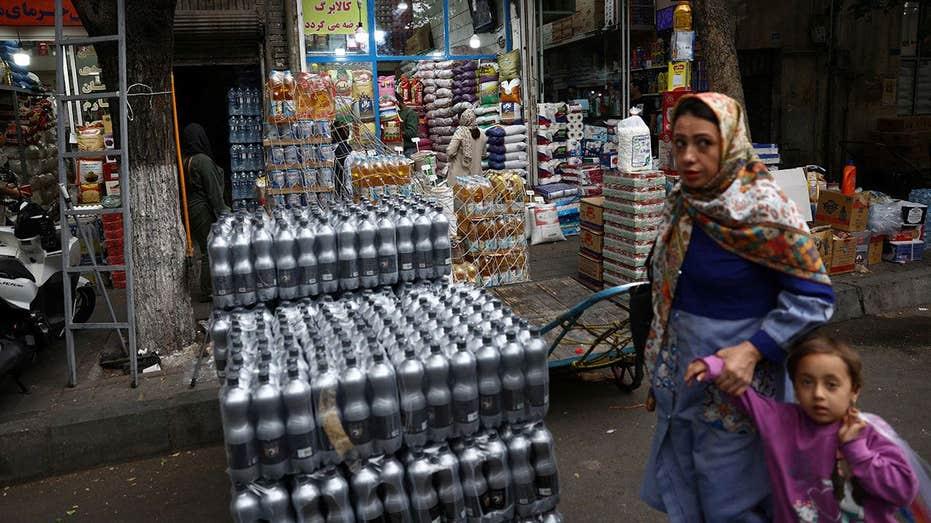
President Donald Trump is leaning into economic pressure as his primary tool against Iran, signaling a preference for sanctions over immediate military escalation while highlighting Iran’s severe economic distress, characterized by rampant inflation and a collapsing currency. Trump asserts that the U.S. naval blockade of the Strait of Hormuz has exacerbated Iran’s financial crisis, leading to a situation where the regime struggles to even pay its troops. However, a critical question emerges: to what extent is Iran’s economic freefall a consequence of U.S. sanctions, and how much is attributable to decades of internal corruption, mismanagement, and skewed spending priorities by the Islamic Republic itself? Evidence suggests that even before intensified sanctions, Iran consistently diverted vast resources towards its military and the Islamic Revolutionary Guard Corps (IRGC) at the expense of public services and ordinary citizens. Data indicates a dramatic rise in military spending as a percentage of government expenditure, while education and health budgets have shrunk, with the IRGC alone receiving significantly more than the conventional military. Furthermore, the IRGC has cultivated a vast economic apparatus, including entities like Khatam al-Anbiya Construction Headquarters, which profits from opaque channels and potentially benefits from the very sanctions designed to cripple the regime. As the U.S. Treasury Department intensifies its ‘Economic Fury’ campaign, targeting oil trade, shadow banking, and cryptocurrency networks, the regime is forced to rely on increasingly clandestine financial maneuvers. While the U.S. maintains humanitarian exceptions to sanctions, the economic pressure is visibly impacting daily life in Iran, with reports of desperate citizens resorting to shoplifting basic necessities. Experts argue that Iran’s internal policies, including its nuclear brinkmanship, support for proxies, and vast military spending, are the root causes of its economic vulnerabilities, with sanctions merely accelerating an already declining trajectory, creating a complex dynamic where internal actors may even have an incentive to perpetuate sanctions to maintain their profitable, illicit financial operations.
Adapted from: Latest World News on Fox News