









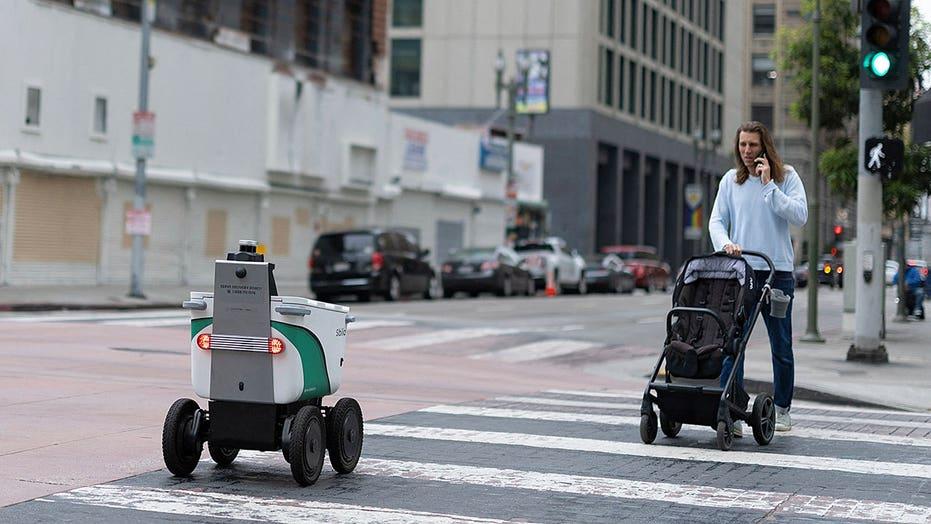
In a bizarre trend emerging across American cities, the very robots designed to bring convenience are becoming targets of vandalism, sparking a debate about public acceptance of AI and automation. Videos circulating online and news reports detail instances of food delivery robots being kicked, overturned, and deliberately obstructed, with some encounters escalating to viral social media events. While these autonomous machines, often moving at a walking pace and equipped with friendly digital interfaces, are designed for efficiency, they are increasingly perceived by some as symbols of job displacement and the unsettling encroachment of artificial intelligence into daily life. The frustration is palpable, with incidents in Philadelphia and Los Angeles highlighting a growing tension between technological advancement and human employment concerns. One protestor, a retired professor, was arrested for blocking an Uber Eats robot, explicitly stating her objection to companies replacing human delivery workers. Beyond job anxieties, these robots have also caused practical disruptions, such as traffic jams caused by malfunctioning units in Chicago, raising questions about their readiness for crowded urban environments and potential impacts on accessibility for individuals with disabilities. The physical presence of AI on sidewalks, unlike its more intangible digital counterparts, makes it an easy focal point for broader anxieties about automation, privacy concerns surrounding data collection, and the lack of clear regulatory frameworks governing their operation. While companies like Serve Robotics report that mistreatment affects a small percentage of their trips, the visibility of these attacks, amplified by social media, creates an impression of widespread conflict, prompting cities to re-evaluate ordinances and pilot programs for robot deployment. Ultimately, the escalating hostility towards these delivery bots underscores a critical need for companies to address public concerns about job security, operational reliability, and sidewalk accessibility, ensuring that technological progress does not come at the expense of community well-being and human dignity.
Adapted from: Latest & Breaking News on Fox News