









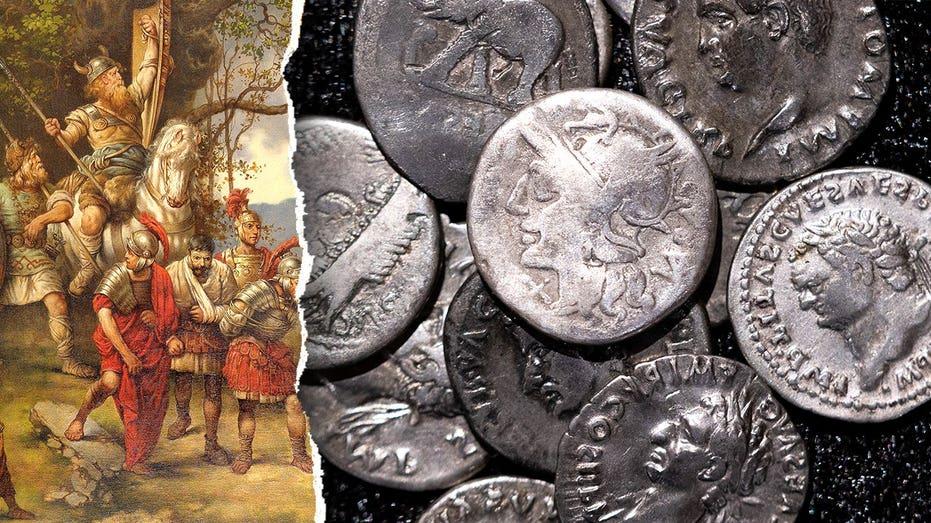
A licensed metal detectorist in Germany has stumbled upon what experts are calling the largest Roman coin hoard from Emperor Hadrian’s reign ever found in the country, a staggering discovery of 934 ancient silver denarii weighing 6.8 pounds and dating back to 125-150 A.D. Unearthed near Wesseling, south of Cologne, by Oliver Riedl, the treasure was immediately reported to archaeological authorities after his detector signaled more buried coins, suggesting a significant cache. Professor Johannes Wienand of the Technical University of Braunschweig described the find as a “huge treasure” and a “time capsule of the money the people in that period actually used day by day,” potentially representing the life savings of an individual, as the hoard would have taken a Roman soldier six to eight years of gross salary to accumulate. Buried intentionally near the Roman Empire’s Rhine frontier, close to Roman cities and fortresses, the identity of the owner remains unknown, but it is believed they were never able to retrieve their savings, leaving behind a remarkable piece of cultural heritage that highlights the importance of responsible archaeological reporting.
Adapted from: Travel News Today on Fox News