









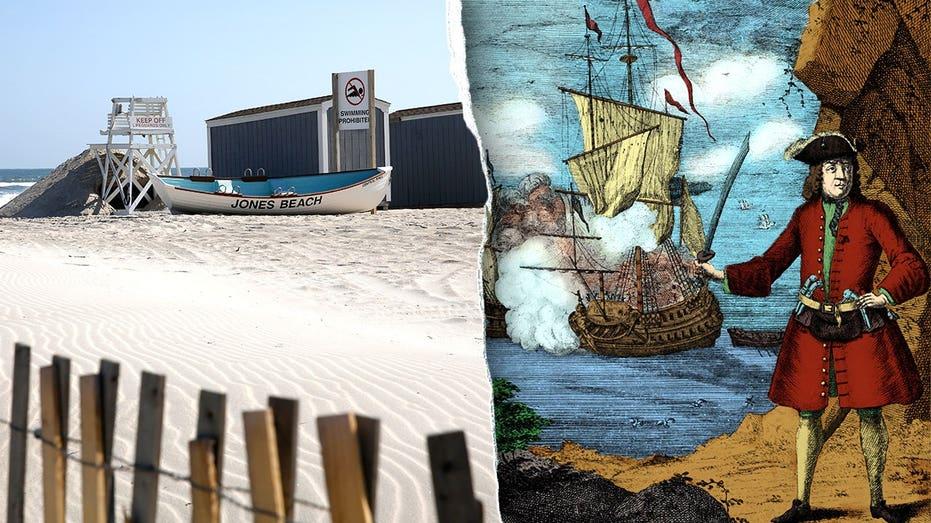
An amateur historian, James Bailey, has unearthed compelling evidence suggesting a connection between Thomas Jones, the prominent colonial New Yorker for whom Jones Beach is named, and the infamous pirate Captain Henry Every, known as the “King of the Pirates.” Bailey’s research, sparked by the discovery of a 17th-century Arabian coin linked to Every in Rhode Island in 2014, points to colonial-era documents that allegedly implicate Jones as a crucial accomplice in Every’s legendary 1695 raid on the Indian treasure ship Ganj-i-Sawai. This audacious heist netted millions in gold and silver, leading to a global manhunt for Every and his crew, who subsequently vanished. Bailey posits that Jones, who later became a wealthy landowner in New York and Rhode Island, may have served as a “wheelman” for Every, assisting the pirates in evading authorities and potentially helping them launder their ill-gotten gains. While Jones’s accumulation of wealth was always a mystery, and his descendants have historically dismissed rumors of piracy as slander, Bailey’s findings challenge this narrative, suggesting that Jones played a significant, albeit hidden, role in one of history’s most audacious pirate exploits. Experts acknowledge the persuasive nature of Bailey’s research, highlighting the deep and often surprising entanglement of early British colonies with piracy, where figures like Jones, who may have operated as a privateer, could easily have blurred the lines into outright piracy, a reality that challenges popular perceptions of pirates as mere outcasts.
Adapted from: Travel News Today on Fox News