









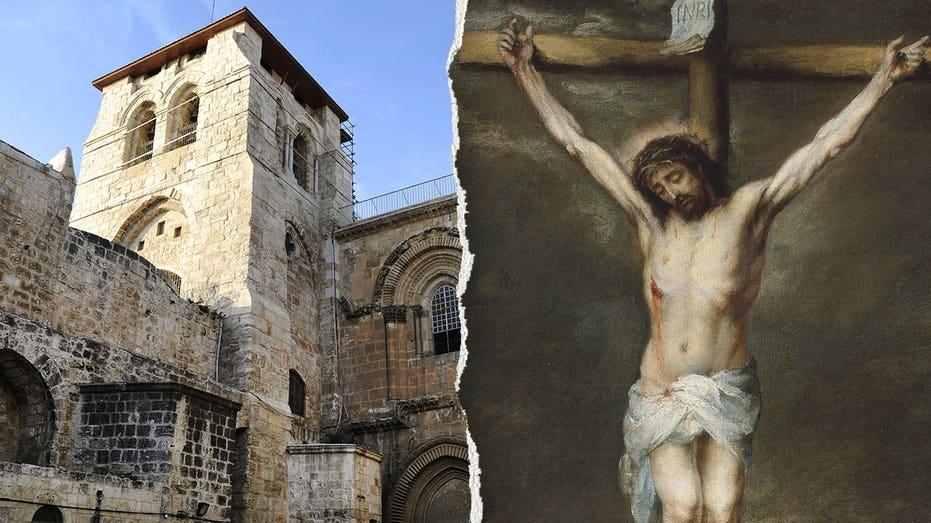
Archaeologists have unearthed compelling new evidence beneath Jerusalem’s Church of the Holy Sepulchre, a site revered as the location of Jesus Christ’s crucifixion and burial, which directly supports the biblical narrative. Led by Professor Francesca Stasolla, the recent excavation uncovered ancient seeds and pollen dating to the period between the site’s use as a quarry and its Roman-era occupation, a finding explicitly consistent with the Gospel of John’s description of a garden and a new tomb in the place of crucifixion where no one had yet been laid. This discovery is particularly significant as the Gospel of John is often questioned by skeptics for its perceived later dating and unique details, yet archaeological findings, including this one, have repeatedly corroborated its accuracy regarding historical and geographical elements. Experts note that this finding adds to a growing body of archaeological evidence that validates specific details within the Gospel of John, reinforcing its reliability and offering a richer understanding of the landscape and context of early Christianity and the life of Jesus.
Adapted from: Travel News Today on Fox News