







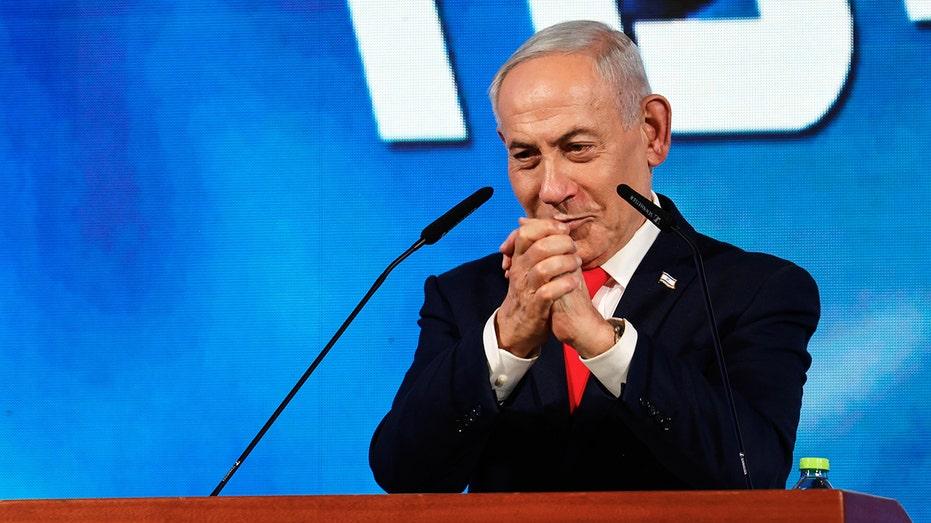
Prime Minister Benjamin Netanyahu’s political bloc has seen a significant surge in vote counts from Israel’s latest national election, defying initial exit polls and positioning him for a stronger-than-expected showing, though a clear majority to form a government remains just out of reach. With approximately 70% of votes tallied, Netanyahu’s right-wing and religious coalition stands at 54 seats in the 120-seat Knesset, a notable climb from earlier projections, while the main opposition and Arab parties collectively hold a majority of 66 seats. This shift has transformed the election’s aftermath from a potential decisive loss into a complex battle for coalition-building, with both Netanyahu and opposition leader Gadi Eisenkot claiming victory amidst widespread voter confusion. The outcome hinges on intricate negotiations, potentially involving Arab parties whose growing influence is a consequential factor, a move that has historically been a point of contention, with Eisenkot previously opposing their inclusion and Netanyahu warning against reliance on them. President Isaac Herzog will ultimately task a lawmaker with forming a government, a process that could take up to 42 days, with the possibility of yet another deadlock and a repeat election looming if no coalition can be finalized. Donald Trump has also weighed in, asserting that his endorsement significantly aided Netanyahu’s improved performance, suggesting a pivotal role for external influences in the domestic political landscape.
Adapted from: Latest World News on Fox News