








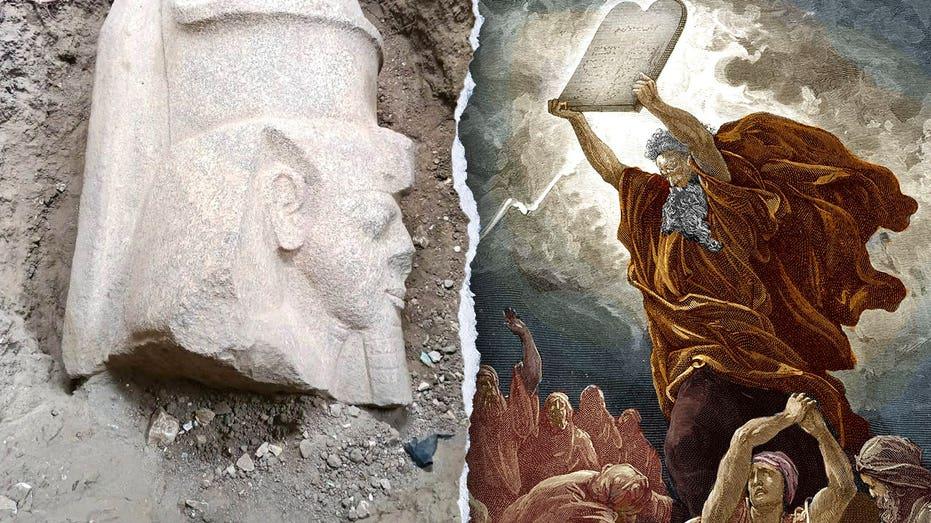
A chance discovery by an Egyptian farmer harvesting cucumbers has led archaeologists to unearth the remnants of two colossal statues, believed to represent Ramses II, the pharaoh some scholars hypothesize may have been the biblical adversary of Moses in the Book of Exodus. The find, announced by the Egyptian Ministry of Tourism and Antiquities, began when the farmer stumbled upon an inscribed stone in his greenhouse at Behbeit El-Hagar. Alerting authorities, subsequent excavations revealed a massive head from one statue, measuring over five feet tall and depicting Ramses II wearing the double crown, with inscriptions bearing his royal titles on the back pillar. Experts estimate this statue, including its base, could have reached nearly 28 feet. A second, partially unearthed statue, also believed to be of Ramses II, was found nearby, with its head clearly showing well-preserved facial features that match the first. This discovery adds to a growing body of evidence, including previous finds of artifacts and inscriptions related to Ramses II, fueling ongoing debate and research into the historical figure who ruled during Egypt’s powerful New Kingdom period and whose reign aligns with the era of the Exodus narrative.
Adapted from: Travel News Today on Fox News