


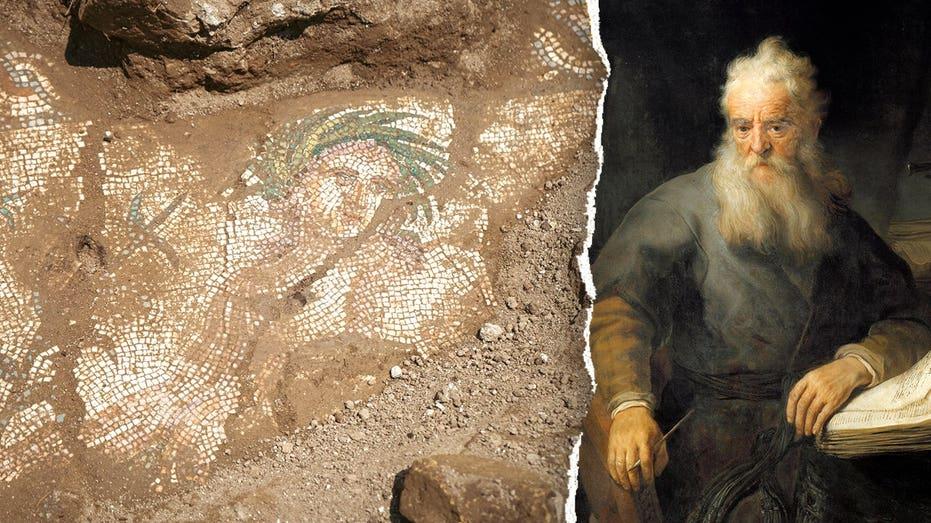
An exceptionally rare pagan mosaic, believed to be the floor of a 3rd-century A.D. pool, has been discovered in Aspendos, Turkey, a site remarkably close to Perga, a city where the Apostle Paul actively spread Christianity during his first missionary journey. The ornate mosaic, measuring approximately 20 by 25 feet and potentially extending into unexcavated areas, features a depiction of the youthful river god Eurymedon, a subject rarely found in ancient mosaics. Officials highlight the god’s portrayal, leaning against an amphora with water flowing to symbolize nature’s abundance and the life-giving power of water, noting that such representations are exceptionally scarce in mosaic art. This significant find, located on Theater Street connecting Aspendos’ acropolis to its theater, offers invaluable scientific data on Roman-period Anatolian mosaic art and underscores Turkey’s rich archaeological landscape, which has recently yielded other significant discoveries tied to the ancient Roman and early Christian worlds, including a rare Aramaic inscription and a Roman military hospital later converted into a Christian sanctuary.
Adapted from: Travel News Today on Fox News