


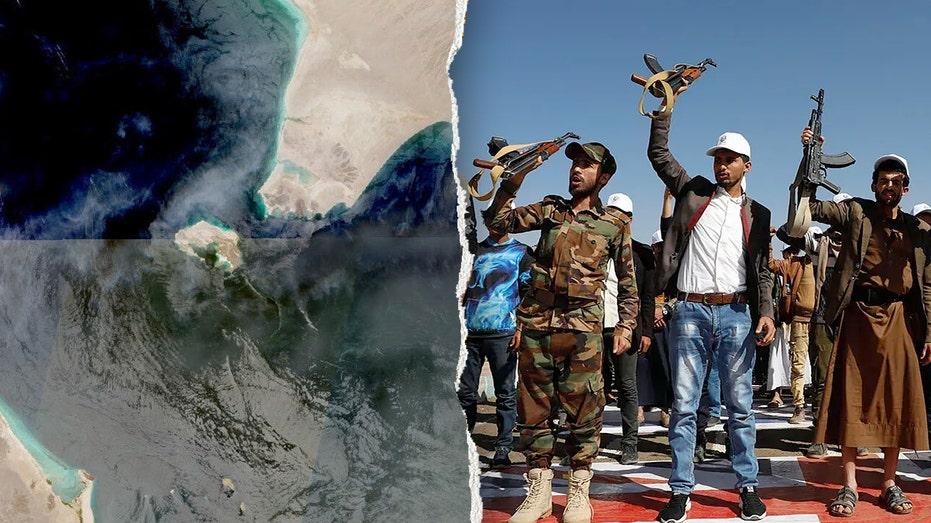
The Bab el-Mandeb Strait, a vital artery connecting the Red Sea to the Gulf of Aden and subsequently the Suez Canal, is under increasing threat from escalating Houthi attacks, raising critical strategic questions about its potential to become a second Strait of Hormuz. Unlike Hormuz, where Iran possesses direct leverage, Tehran’s influence over Bab el-Mandeb relies heavily on its Houthi allies, complicating the security landscape as Yemen itself is fragmented by competing armed factions. This instability was starkly illustrated by recent Houthi attacks resulting in fatalities among shipping crews and rescuers, marking the first deaths in such strikes since the U.S.-Iran conflict intensified. The strategic importance of Bab el-Mandeb, a crucial route for global energy and commercial shipping, is amplified by its connection to the Suez Canal and Egypt’s SUMED pipeline, forming a critical northern corridor. However, the waterway’s southern flank borders a deeply fractured Yemen, where the Houthis control northern territories while various other groups, including the UAE-backed Southern Transitional Council, hold sway elsewhere. This internal division means that while naval power can protect individual vessels, it cannot eliminate Houthi launch sites or resupply routes, necessitating an on-the-ground presence for ultimate security, as noted by STC foreign affairs chief Amr Al Bidh. The situation deteriorates amid a broader escalation in Yemen, with the UN warning of a return to large-scale war and the risk of drawing the country deeper into regional confrontations. The Houthis’ declaration of a naval blockade on Saudi Arabia further heightens tensions, though the U.S. emphasizes its commitment to freedom of navigation and necessary actions against such threats. The economic stakes are rising, particularly for Saudi Arabia, which increasingly relies on Red Sea exports due to disruptions in the Strait of Hormuz, turning the Red Sea corridor into a potential secondary pressure point. Nobel laureate Tawakkol Karman warns that Yemen’s internal collapse poses a threat far beyond its borders, impacting international navigation, energy security, and global supply chains, and advocates for the restoration of a functioning Yemeni state as essential for defeating armed groups and securing regional peace. However, experts like Richard Goldberg caution against a direct comparison to Hormuz, noting Iran’s less direct influence and the alternative shipping route around Africa, which, while costly, offers a bypass not available for Hormuz. In response, Saudi Arabia is pursuing a dual-track security strategy: a mutual-defense pact with Turkey and Pakistan aimed at coordinated responses to Iran-backed groups, and a multinational maritime-defense coalition focused on protecting waterways. The U.S. reiterates its commitment to freedom of navigation in both straits, vowing to deter attacks, disrupt illicit flows to the Houthis, and support its regional partners.
Adapted from: Latest World News on Fox News