








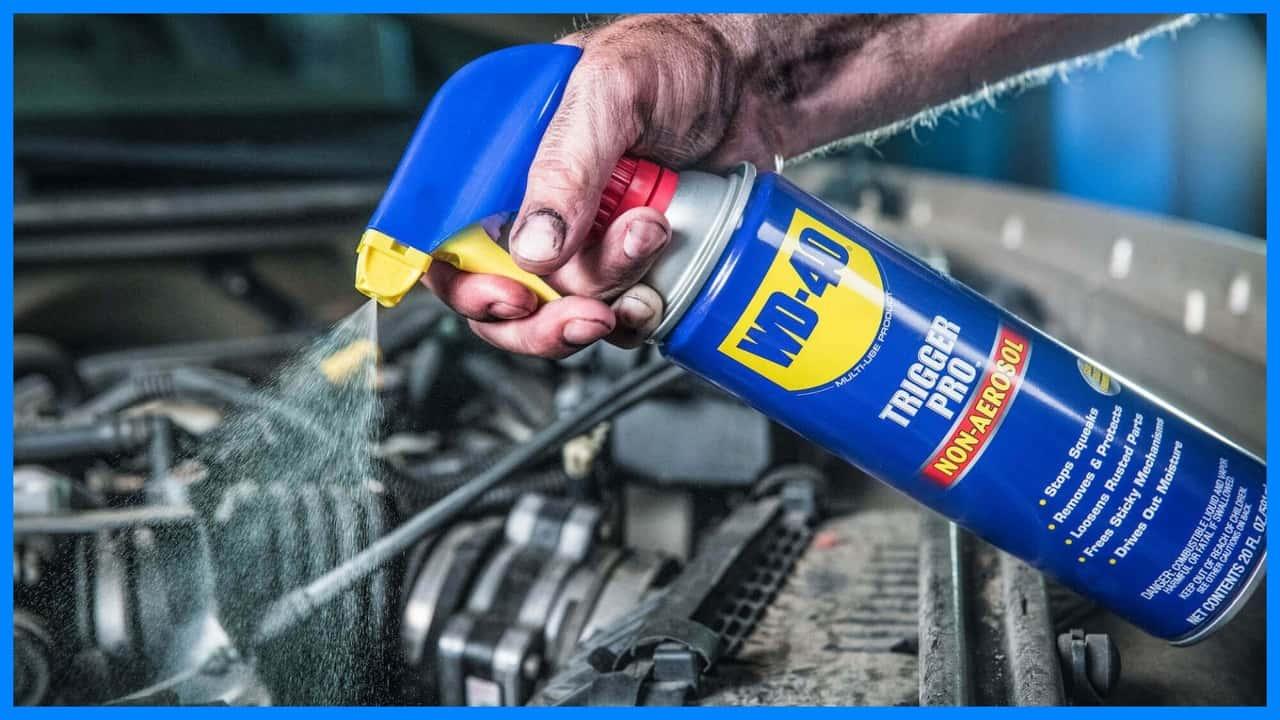
Far from being a simple lubricant, WD-40’s true power lies in its unique formulation as a water-displacing compound, hence its name. Primarily composed of a solvent and heavier oils, WD-40 works by penetrating tight spaces and displacing moisture. This action is crucial for preventing rust and corrosion on metal surfaces by creating a barrier against water. While often mistakenly thought of as a powerful lubricant, its lubricating properties are secondary and temporary; it’s far more effective at freeing stuck parts, silencing squeaks, and cleaning grease and grime due to its solvent action. However, its effectiveness as a lubricant diminishes over time as the solvent evaporates, leaving behind a residue that can attract dust and dirt. Therefore, for applications requiring long-term lubrication, such as bicycle chains or door hinges, dedicated lubricants are a better choice. Drivers should also exercise caution, avoiding its use on certain plastics, rubber components, and electrical contacts where its solvent properties could cause damage or malfunction.
Adapted from: Motor1.com - Articles