








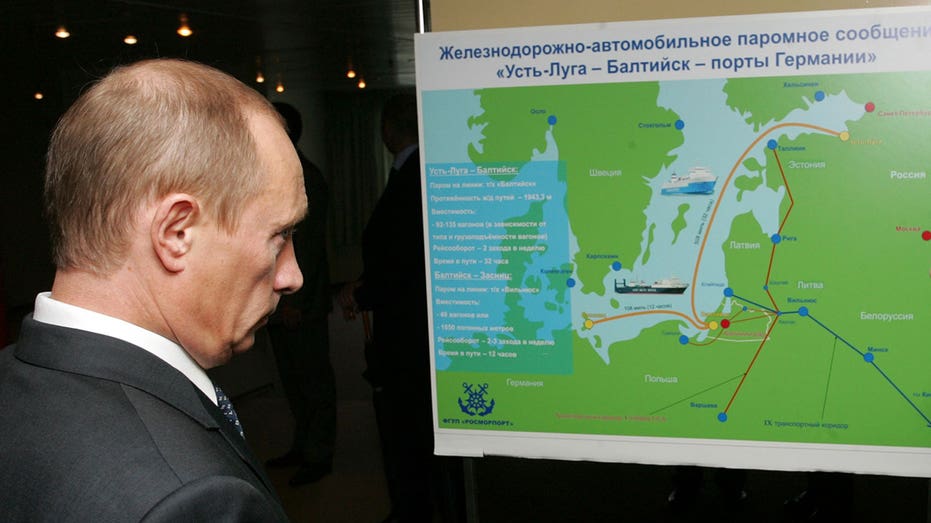
Russia has issued a stark nuclear threat, warning NATO it could deploy its “entire arsenal of forces and capabilities, including nuclear weapons” if the alliance attempts to isolate the strategically vital Russian exclave of Kaliningrad, a move that dramatically heightens fears of a direct confrontation. This heavily militarized Baltic Sea territory, wedged between NATO members Poland and Lithuania, is not only home to significant Russian military assets but is also increasingly viewed by experts as a critical hub for Moscow’s hybrid warfare operations targeting Europe. The warning, detailed in a diplomatic document obtained by Reuters, also raised the chilling prospect of strikes against NATO “decision-making centers” from the conflict’s outset. While NATO vehemently denies posing any threat and labels Russia’s nuclear rhetoric as irresponsible, experts like Carrie Filipetti of the Vandenberg Coalition suggest these threats are a consistent tactic by Putin to deter Western support for Ukraine, especially as Russia faces mounting pressure in the ongoing war. Dr. Azeem Ibrahim from the U.S. Army War College emphasizes that NATO must take these warnings seriously, as Russia’s strategy has evolved beyond conventional warfare to target critical infrastructure and societal functions through hybrid means, with Kaliningrad serving as a “front-line fortress” for such disruptive operations. The ambiguity of these hybrid attacks, which can cripple civilian communications and essential services with plausible deniability, poses a unique challenge to NATO’s collective defense framework, forcing the alliance to reconsider its posture and establish clearer consequences, potentially even invoking Article 5 for significant hybrid assaults. Lithuania, directly bordering Kaliningrad, has condemned Russia’s threats as attempts to fracture Western unity and impede support for Ukraine, while simultaneously bolstering its own defenses and reaffirming its commitment to defending NATO territory and aiding Ukraine. The escalating rhetoric and the strategic importance of Kaliningrad underscore a dangerous new phase of confrontation, where nuclear threats are used as a tool of deterrence amidst a growing landscape of hybrid warfare, with the potential for miscalculation and catastrophic escalation looming large.
Adapted from: Latest World News on Fox News