










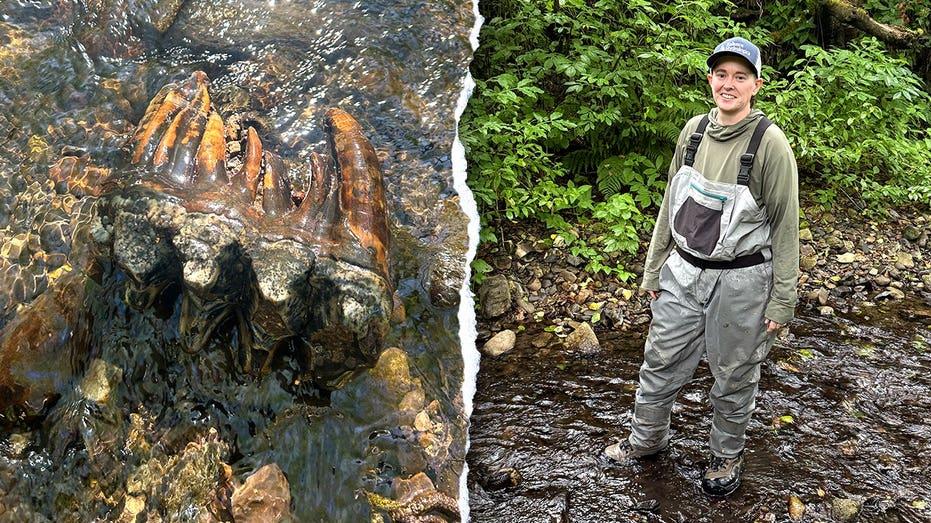
A routine creek survey in a California open space preserve took a dramatic turn when a geomorphologist, initially mistaking it for an odd rock, discovered a remarkably preserved molar from an ancient Pacific mastodon. This extinct, elephant-like herbivore roamed the Earth until roughly 11,700 years ago, but this particular tooth is estimated to be far older, dating between 50,000 and 100,000 years old based on its discovery location. The tooth’s immaculate condition, with most of its fragile roots intact, suggests it remained largely undisturbed in the stream bed where the mastodon died, offering a rare glimpse into the animal’s final moments. Paleontologists believe the rest of the mastodon’s skeleton may still be buried at the site, making this discovery exceptionally significant. Researchers plan to carbon date the molar and create a 3-D scan to further analyze this extraordinary find from the Ice Age.
Adapted from: Travel News Today on Fox News