










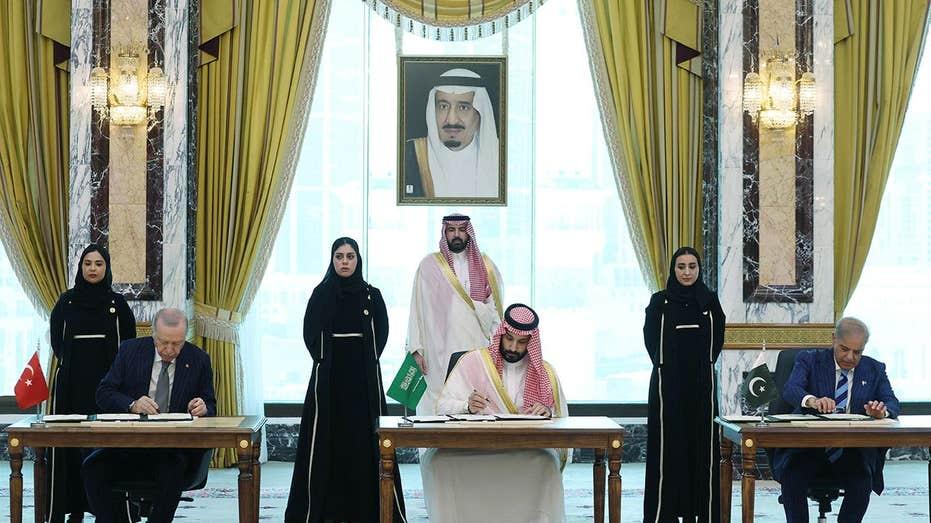
A newly signed defense pact between Saudi Arabia, Turkey, and Pakistan is igniting debate about the formation of a competing regional bloc that could challenge the U.S.-backed architecture centered on Israel and the Abraham Accords. The agreement, dubbed the Mecca Joint Defence Agreement, establishes a mutual defense clause, stipulating that an armed attack against one signatory will be considered an attack against all three, a provision Turkish Foreign Minister Hakan Fidan explicitly likened to NATO’s Article 5. While Saudi Arabia seeks to hedge against potential U.S. security commitment uncertainties following its designation as a major non-NATO ally without a treaty-level guarantee, Pakistan gains energy security, investment, and regional influence, complemented by its significant military capabilities. Turkey, already a NATO member, stands to benefit from a larger market for its burgeoning defense industry and increased strategic leverage amid rising tensions with Israel. The pact, which has been in negotiation for nearly three years, aims to strengthen collective deterrence, though officials from all three nations emphasize it is defensive in nature and not directed against any specific country, including Iran, which has largely downplayed its significance. Despite official assurances that the U.S. remains Saudi Arabia’s primary strategic partner and that the pact is not a move away from normalization with Israel, analysts are divided. Some view it as a strategic diversification and burden-sharing initiative for Washington, while others express skepticism about its immediate deterrent capabilities and warn that even a loosely formed pact could provoke counter-alignments, potentially leading to increased regional tensions and a hardening of opposing geopolitical camps, thereby complicating existing U.S. foreign policy strategies and the nascent economic integration efforts like the India-Middle East-Europe Economic Corridor.
Adapted from: Latest World News on Fox News