









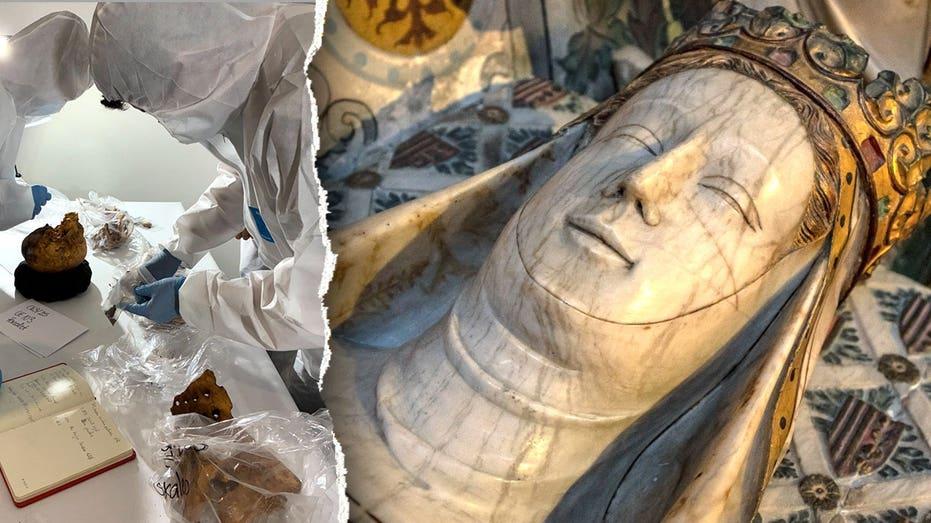
In a groundbreaking revelation from Barcelona’s historic Royal Monastery of Santa Maria de Pedralbes, researchers have uncovered a profound mystery within centuries-old royal tombs: several interments do not contain the individuals historically attributed to them. This startling discovery emerged from a three-year multidisciplinary investigation into the nearly 700-year-old monastery, founded by Queen Elisenda of Montcada. Investigations into tombs, including those of Artau de Foces and Francesca Saportella, the monastery’s second abbess, revealed significant discrepancies. For instance, Artau de Foces’ tomb yielded the remains of five individuals—two adult women and three children—instead of a single male. Similarly, Francesca Saportella’s tomb contained at least nine individuals from later periods, some with evidence of violent trauma, and a mummified female torso with fetal remains, but not the abbess herself. These findings suggest a complex history of tomb re-openings and alterations over centuries. However, a positive finding was the excellent condition of the wooden box preserving Queen Elisenda’s tomb, dating back to the medieval period. Analysis of her remains indicates she was buried in modest clothing and suffered from age-related health conditions. The project has also unearthed over 200 archaeological samples, including funerary offerings and preserved plants like rosemary, offering insights into medieval burial rites and body preparation. Ongoing DNA testing, planned until 2027, aims to further unravel these identities and provide a deeper understanding of medieval Catalan society through its funerary culture, with all studied remains to be respectfully returned to the monastery as per Queen Elisenda’s final will.
Adapted from: Travel News Today on Fox News